50+ AI Marketing Statistics in 2025: The Numbers That Show AI Is Transforming Marketing
Summarise this blog




AI marketing hit a turning point in 2025. The numbers tell the story better than any prediction could.
78% of organisations now use AI in at least one business function. The global AI marketing market reached $47.3 billion this year and it’s projected to hit $107.5 billion by 2028.
If you’re still wondering whether AI marketing is worth the investment, these statistics will settle the question.
Table of Contents
AI Marketing Adoption: The Big Picture
Most Businesses Are Already Using AI
78% of organisations use AI in at least one business function – and marketing leads the charge.
69.1% of marketers incorporated AI into their strategies in 2024, up from 61.4% in 2023. That’s a jump of nearly 8 percentage points in just one year.
But here’s what surprised me. It’s not just the tech companies going all-in on AI.
Industry Adoption Rates Tell an Interesting Story
- Healthcare: 90% (mostly for patient engagement)
- Technology: 85% (using AI across multiple marketing functions)
- Financial services: 82% (focusing on personalised offers)
- Retail: 75% (emphasising customer experience)
Healthcare leading adoption caught me off guard. Turns out they’re using AI heavily for patient communications and compliance messaging.
Company Size Makes a Huge Difference
Large enterprises with 1,000+ employees show dramatically higher adoption rates. 42% of survey respondents came from organisations with over $500 million in annual revenue.
Small businesses face more barriers – cost, expertise, resources. But they’re catching up fast as AI tools become more affordable and user-friendly.

AI Marketing ROI: The Financial Reality
Here’s where AI marketing gets really interesting. The ROI numbers are hard to ignore.
The Return Numbers Are Impressive
Average ROI: $3.70 for every dollar invested in generative AI
But top performers do even better. The best companies see $10.30 ROI per dollar invested. That’s not a typo.
McKinsey found that 53% of companies report revenue increases from AI use in marketing and sales. 7% achieved greater than 10% revenue increases.
Performance Improvements Across the Board
Conversion rates increase by an average of 20% when companies integrate AI into marketing. Some see up to 30% improvements through predictive analytics.
Email marketing with AI personalisation is particularly strong. $38 ROI for every $1 spent in e-commerce.
AI-powered targeted advertising increases conversion rates by an additional 10%. Predictive analytics drives a 20% increase in sales efficiency.
Early Adopters Have a Clear Advantage
BCG research shows AI marketing leaders are:
- 2X more likely to update offers in real-time
- 2.5X higher revenue growth rates compared to traditional approaches
- 70% reduction in production costs
- 3X increase in marketing content production speed
The gap between AI users and non-users is widening fast.
What This Means for Your Business
If you’re not using AI in marketing yet, you’re competing against companies that are achieving 2-3X better results.
The question isn’t whether AI marketing works. It’s how quickly you can implement it effectively.
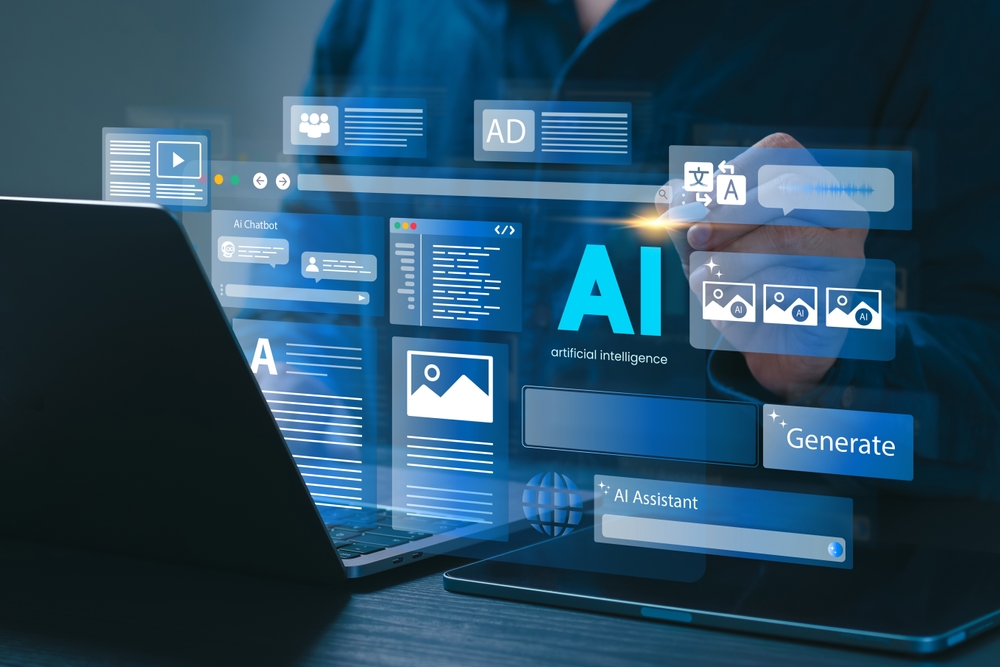
Generative AI: The Content Creation Revolution
Generative AI changed everything about content creation in marketing.
Content Creation Adoption Is Exploding
63% of marketers already use generative AI for content creation. 79% plan to expand adoption in 2025.
ChatGPT dominates with 69.9% market share for AI tool subscriptions. Over 70,000 businesses use DALL-E for creating graphics.
Time Savings Are Massive
Marketers save an average of 3 hours per piece of content using AI tools. That’s 2.5 hours overall per day back in their schedule.
84% of marketers using AI report creating content more efficiently. Organisations see 113% increases in SEO-optimised content output.
Blog writing gets 50% faster with AI assistants. The efficiency gains compound quickly.
What Marketers Create with AI
- Email and newsletters: 47% of AI-powered written content
- Text-based social media: 46%
- Video-based social media: 46%
- Long-form content and blogs: 38%
85% of marketers report improved content quality with AI assistance. 25.6% say AI-generated content performs better than traditionally created materials.
AI Marketing Tools and Spending
The money flowing into AI marketing tools tells the adoption story.
Market Size Numbers
Global AI spending reached $235 billion in 2024. The AI marketing market specifically hit $47.3 billion in 2025.
Projections show 36.6% CAGR through 2028, reaching $107.5 billion. That’s aggressive growth.
How Marketing Departments Spend on AI
30% of CMOs spend over $5 million annually on marketing technology. 43% spend between $2-5 million.
Nearly 60% expect to increase AI tool investment in 2025. Only 2.75% foresee decreases. The confidence in AI ROI is clear.
Tool Adoption by Category
- Content creation and optimisation: 85% adoption
- Predictive analytics and data analysis: 60%
- Customer segmentation: 36%
- Email marketing automation: nearly universal among AI users
- Chatbots: 58% plan increases in 2024
The trend is toward integrated AI platforms rather than point solutions.
Customer Sentiment: Mixed but Improving
Consumer attitudes toward AI marketing show interesting patterns.
Willingness to Use AI
40% of consumers express willingness to use AI for daily shopping decisions. 52% remain open to AI assistance with product and website experiences.
56% of Gen Z consumers want tailored AI recommendations. Older demographics show lower acceptance rates.
Trust Issues Remain
Only 23% of Americans trust AI on social media platforms. 27% trust AI search results.
90% prefer human customer service over chatbots. But here’s the disconnect: 80% of customers who actually interact with AI chatbots report positive experiences.
59% rate AI customer support interactions 8/10 or higher.
There’s a gap between stated preferences and actual satisfaction. Better AI implementation and communication can bridge this.
Industry-Specific Comfort Levels
73% of shoppers believe AI can positively impact customer experience in retail.
Financial services and healthcare show lower consumer comfort. These industries need more transparent communication about AI usage.
Marketing Automation Efficiency Gains
AI-powered marketing automation became standard practice in 2025.
Adoption and Impact
71% of companies use or adopt marketing automation. 49% specifically for personalisation.
Marketing automation saves companies an average of 6+ hours per week on routine tasks. 79% of marketers highlight efficiency increases as the top AI benefit.
Email Marketing Performance
Automated campaigns generate 320% more revenue than non-automated campaigns.
Email open rates increased to 39.64% in 2024, up from 26.8% in 2022. Personalised emails triggered by automation drive 10X higher conversion rates than mass emails.
Automated email campaigns show 15.2% higher open rates and 34% higher click-through rates.
Productivity Across Functions
90% of marketing teams report AI helps complete tasks faster. 40% of businesses reduced content creation time to under 5 hours per week – previously achieved by only 16%.
Automated workflows reduce operational costs by an average of 12.2%. Contact center agents see 14% productivity increases with AI conversational assistants.
H2: Personalisation Impact on Customer Engagement
AI-powered personalisation transforms how customers engage with brands.
Personalisation Performance
77% of marketers using generative AI report it helps create more personalised content. 96% of marketers state personalisation led to repeat business.
94% report personalisation helped increase sales in 2023. 72% of AI-using marketers personalise customer experiences through automation.
Customer Satisfaction Results
Companies report 3.5X greater increases in customer satisfaction rates when using AI capabilities effectively.
58% of marketers report improved customer retention through automation. Executives expect 9% improvement in customer engagement within three years based on generative AI use.
Lead Generation Improvements
80% of marketing automation users see increased leads. 77% experience higher conversion rates.
Only 33% of respondents feel their customers currently receive very personalised experiences. There’s significant room for improvement as AI capabilities advance.
Implementation Challenges and Barriers
Despite promising returns, organisations face real barriers to AI marketing adoption.
Top Implementation Challenges
- Data privacy concerns: 40.44%
- Lack of technical expertise: 37.98%
- Implementation costs: 33.17%
- Integration challenges: 28.61%
- Unclear ROI expectations: 24.54%
Skills and Training Gaps
67% of marketers report lack of education and training as the biggest adoption barrier. 70% of business leaders don’t believe their teams have skills to safely use AI.
Training investment lags behind need. 70% of employers don’t provide generative AI training, despite 54% acknowledging such programs are important.
Only 35% of marketers feel confident evaluating AI solutions.
Quality and Governance Issues
78% of organisations cite data security as a primary challenge. 62% report compliance with data protection regulations significantly slows deployment.
Only 27% of organisations review all AI-generated content before use. This creates potential brand risk.
These challenges explain why only 1% of companies describe their AI rollouts as “mature”.
What’s Coming: Future Projections Through 2030
The AI marketing landscape faces dramatic expansion.
Market Growth Projections
Market value projected to reach $67-75 billion by 2026 based on current growth rates. Ultimate projection: $240.58 billion by 2030.
North America leads with 40% market share at $23 billion in 2025. Asia-Pacific shows the fastest growth at 25% CAGR.
Technology Evolution
By 2026, 70% of customer experience leaders plan to integrate generative AI into all touchpoints. 45% of supply chains will use AI-driven analytics.
One in five marketing roles will be held by AI workers by 2028. Companies expect 30% of outbound marketing messages to be synthetically generated by large organisations in 2025.
Investment Patterns
Marketing technology budgets will grow to 30.9% of total marketing spend within five years. 93% of marketers report new AI features in their technology stacks.
85% plan to increase AI use over the next 36 months. 80% enterprise adoption expected by 2030.
What These Statistics Mean for Your Marketing Strategy
The data tells a clear story. AI marketing isn’t experimental anymore. It’s becoming table stakes.
If You’re Not Using AI Yet
You’re competing against companies achieving 2-3X better results across conversion rates, content production and customer engagement.
The skill gaps and implementation challenges are real. But waiting makes them worse, not better.
If You’re Just Starting with AI
Focus on areas with the clearest ROI first. Email marketing automation and content creation show the most immediate returns.
Start small, measure everything and scale what works.
If You’re Advanced with AI
The opportunity is in integration and personalisation at scale. Most companies still haven’t figured out truly personalised experiences.
The data shows massive performance differences between AI leaders and everyone else. The gap is widening.
AI marketing stopped being optional in 2025. The statistics prove it’s now essential for competitive marketing.
Learn how to implement AI marketing strategies that drive real results with our complete guide.




Join the discussion - 0 Comment